Posts

Showing posts from September, 2013

The Long and Short of It: The Spinng Heart by Donal Ryan

Image
This post, a part of the The Long and Short of It  series, is done in conjunction with Simon Clark from The Blether. BOOK: The Spinning Heart Format:  Paperback (Courtesy Random House) The Man Booker Prize longlist for this year was one dominated by Irish writers, including first time novelist Donal Ryan.  His book, The Spinning Heart , has already received rave reviews on sites such as The Guardian and Booktopia.  Its subject is bleak; a portrait of desperation in working class Ireland during the recent recession.  It is told from the points of view of several characters, each given the chance to tell their story in a dramatic monologue.  Although the points of view are never repeated, it is clear that the main characters are Bobby, Realtin and Bobby’s father Frank.  Each monologue overlaps in such a way that reading The Spinning Heart is a little like doing a jigsaw puzzle, except each time you approach the board from a different an...
Dear Writer Revisited: Letters Twenty and Twenty-One

The Ear and the Heart This letter, Virginia warns, takes the advice she is giving out of the realm of practical discussion and into one of intangibles like "magic" and using "your heart."  It is a letter about allowing a rhythm to develop in your prose. Rhythm will emerge in prose with constant practice.  You may already have noticed it.  It will match the ideas you are working on and the style of the piece you are writing.  Try reading your work aloud (personally I read to the pets so I don't feel so stupid) and see if it flows trippingly off the tongue the way that Lolita does. Only through reading good fiction constantly will you find your true rhythm, so read on. When All's Said and Done We have reached the end of the road now, blog readers. Virginia commends Writer on her progress in this letter, providing through her compliments a summary of all the work she has undertaken, and if you've been working along, a kind of checklist for you to...

Dear Writer Revisited: Letter Nineteen

Image
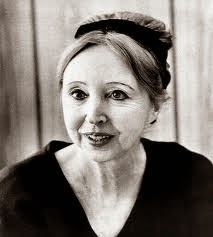
Finally, Virginia O'Day comes to the BIG QUESTION. Where do ideas come from!? This is a big question because it's impossible to ever completely and satisfactorily answer.  It's different for every writer.  But in this letter, Virginia explains why we all have the potential for great ideas for fiction.  She states that if you are capable of making up fiction and lies then you are capable of fiction.  This idea comes from a quote by the writer Anais Nin, which says: The important thing is to find the message which liberates, unleashes one's unconscious responses. Virginia apologises that she cannot be more prescriptive in her explanation, but she does offer a list of exercises for the writer to try if they are stuck, including: * Picking a word and free-writing * meditating * using dreams * concentrating on one image and using it as a focus (i.e. if you choose tree, you will probably find that you have a thought or a feeling associated with trees you c...

Dear Writer Revisited: Letter Eighteen

The Manuscript You may have noticed that these posts are getting shorter and shorter.  They are because the chapters are, although I am leaving out a lot of anecdotes and examples.  Once again, I stress that you need to get your hands on a copy of this book and work through it for yourself.  It is proving invaluable.  I am feeling totally new as a writer at this point; I have a new outlook and I have found a new confidence.  I feel as if I am walking around wearing an official hat that says WRITER   and man it feels great. One thing that I am loving so far about Dear Writer Revisited  is the careful balance between loving, tender advice from someone who has been there, and cold, hard practical facts.  This letter is all about the facts, and the facts are:  If you format your submissions properly, they are more likely to be read. But first, a little story. Once, at work, a young fellow handed in his resume in the hopes that there would...

Dear Writer Revisited: Letter Seventeen

Getting Into Print Moving along at a cracking pace, this letter deals with the steps writer should take now that she has finished her manuscript. Getting published was described by writer Enid Bagnold as being like a "dream of pleasure".  It certainly seems as if it would be.  I often dream of being published.  It stands to reason that being published would feel like a dream.  However, it can take a very very very VERY long time for the dream to come true. Virginia encourages Writer (and you) to have faith in your work.  Your book will be turned down by publishers.  Probably by a lot of them.  You can take solace in the fact that a number of great novels were initially rejected.  Or you can choose to be down on yourself about it ( If no one wanted Harry Potter at first, why would they want my book??? )  Learn from rejection: learn to trust your own judgement. Here are some suggestions Virginia makes to Writer for how to get her work i...

Dear Writer Revisited: Letter Sixteen

Pepper and Salt We've gone from writing and life philosophy back into the territory of writing style and creation.  Good.  About time too, all that heavy stuff was beginning to make me feel deep and moody.  A little strange for a book on writing, although no one said a collection of letters had to have a thematic structure. In this letter, Virginia talks about understatement and overstatement in writing.  Specifically, she makes this letter a love letter to the understatement. Understatement is powerful because it stimulates the reader's imagination, causing them to become emotionally invested in your story.  It requires them to put in more work than overstatement, and therefore lends itself more to literary genres than say romance or popular fiction (both of which favour the overstatement.)  Overstatements also tend to be heavy with slopping adjective and adverb use. This chapter is a bizarre and confusing one:  it goes from this rather mispla...

Dear Writer Revisited: Letter Fifteen

Image
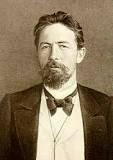
Writers are Different This chapter begins to get into some heavy territory for me.  It asks all the questions I constantly ask myself, particularly during moments of self doubt, beginning with: Is it possible to be a writer and have a job? To me, the short answer is yes, because it has to be.  The sheer volume of unpublished manuscripts out there is enough to make my hair stand on end.  I know people who have left jobs that were sapping their energy creatively, and I applaud them.  I think these people are the ones with the guts to go all the way.  But as for me?  I couldn't handle all those unknowns. Virginia's advice to Writer provides some comfort.  Yes, she says, it is possible, so long as the job doesn't take so much out of you that you are an empty husk incapable of writing.  Chekov provides an interesting anecdote.  He was a writer AND a medical doctor, thinking of one as his wife and the other his mistress.  (Guess which ...

Dear Writer Revisited: Letter Fourteen

Practical Matters According to Carmel/ Virginia, it is important for us/ Writer to stay connected with the world of writing.  This can be achieved by: * reading (because honestly, no one who hates reading should ever put pen to paper or fingers to keys) * read reviews (and might I add, writing them) * joining a writing organisation  (In WA you can choose from WritingWA, FAWWA, KSP and more) * joining a writing group (hi guys!) * going to festivals where you can meet writers and publishing types * participating in courses (try UWA extension) A 2013 audience should also consider * reading blogs * keeping their own blog and building an author platform * following writing types on twitter (it's a great way to collect useful links) * liking author and publisher pages on Facebook * connecting with industry names on LinkedIn One of the things that has really marked this year as being The Year Of Writing for me was the degree of seriousness with which I began doing a...

Dear Writer Revisted: Letters Twelve and Thirteen

Image
A double post today, largely because I missed a day on Thursday, but also because these two chapters do tend to go hand in hand. Before I start, I just wanted to make a quick point:  A few of you have been commenting that you feel as if you don't need to read Dear Writer Revisited because you are reading the book through me.  This makes me feel terrible!  I need to make it clear that I am by no means giving you the full experience of this book, I am simply working my way through it and reflecting.  I am leaving out the fabulous quotes, the in depth analysis and overall the wonderful atmosphere of the book.  They say no two people ever read the same book.  What you get out of Dear Writer Revisited will hopefully be different to what I get out of it.  As they say in Bali, same same but different. Don't get me wrong: my heart is warmed by all the charming responses these posts have been getting and I am enjoying the process immensely, but I wouldn't be...

Dear Writer Revisited: Letter Eleven

Image
Cause of Death Following on from the previous post about titles, I'd like to just take a moment to appreciate how fantastic the headings for each chapter are in this book.  Cause of Death would have to be one of my favourites to date.  It's perfect because the form and style of this chapter are a little bit like a lecture on how to diagnose your novel and what exactly is stopping it from being the amazing entity you originally envisioned it as. Virginia tells Writer that the act of writing can sometimes be a bit cyclical in nature, which makes it a little tricky.  Lack of passion for the material can lead to mistakes that are fatal for prose.  Luckily, treating these 'symptoms' can actually revive passion.  Blogger's note:  I actually think that the making of these mistakes can't purely be blamed on a lack of passion.  I know a lot of writers who do these things when they write and they are driven as they come.  It's just that along the way, w...

Dear Writer Revisited: Letter Ten

Image
Baby's Name Finding a Title for your Story Hooray!  This couldn't come a moment too soon because I am stupendously, bizarrely, terribly, horribly bad at naming things. And, as Virginia says, titles must be interesting and must provide an open invitation to read on.  Who is going to buy a book that seems duller than their taxes?  Not me!  The title is key in marketing your book, and if you have a great title, customers will remember it and maybe you when they go to the bookshop.  This prevents horrible situations where your bookseller looks at you down her stylish glasses with a polite mixture of confusion and fatigue when you enter and say "I'm looking for a book but I don't remember the title or the author's name, only that they talked about it on ABC's Books and Arts Daily sometime during May to October."  (Seriously, don't do that.  Booksellers are excellent people but we are not genies.) 2 word titles have a nice rhythm to them and are ...

Dear Writer Revisited: Letter Nine

Image
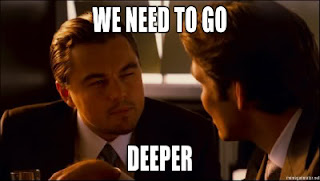
The Thought Experiment: The Role of Imagination in the Creation of Fiction Erm... it's the main one, isn't it? Virginia has found yet another fault with Writer's story, "The Scream at Midnight" (poor Writer), leading me to ask the question of why Virginia is persisting with reading this story at all.  She must be the world's nicest mentor.  In this letter, Virginia wants to explain to writer why her story seems to fall a little flat. It lacks imagination. Spot on, Leo.  Help yourself to a cookie. Elizabeth Jolley encouraged writers to "develop the moment of truth with the magic of imagination."  In other words, take the things you have seen and observed, and extrapolate them to logical and even illogical circumstances.  Imagine.  And if you think you cannot imagine, get someone to read the following quote to you and close your eyes. Your mouth is open and someone is pouring warm milk chocolate into it, slowly.  It's sliding down yo...

Dear Writer Revisited: Letter Eight

Image
Stranger than Fiction * Incidentally a great film starring Will Ferrell (I know, go figure) and Emma Thompson. During this letter, Virginia instructs Writer on the idea of plausibility in fiction. In writing, as in a murder investigation (if you watch Castle)  there are no such things as coincidences. Coincidences in writing should actually be called BIG FAT WHOOPSIES because they pretty much sign the death warrant on your work.  Bye bye suspension of disbelief.  Hello angry letters to the publisher demanding money back.  If you want to write about something strange or implausible, you really have to sell it.  You have to make it true through your fiction. In writing, as mostly happens in life, cause always precedes an effect, although as my boyfriend is fond of saying, correlation does not imply causation.  (He's really good at maths and science.)  Following this rule in the construction of fictional worlds will help to create a fictive dream ...

Dear Writer Revisited: Letter Seven

Image
The Centre of the Mystery Think of writing as being a process of discovery.  The treasure is you! Virginia's seventh letter returns to the material covered in her first, which was all about drawing on experiences to write what you know.  But just because she's asking you to write about your past doesn't mean she is giving you a free pass to go and pass off works of autobiography as works of fiction.  Once again, I stress; in writing what you know, teachers of creative writing really mean experiences, feelings, relationships, the essence of things, rather than real events, people and conversations, although you can fictionalise those too if you're really sneaky about it. In accessing our memories and experiences, we must become like children, but remain mature writers.  We must learn to see the world in a childlike way; as if for the first time, every time.  Because we may not be, but our reader is.  Just because you know the jetty down at Deep Water P...

Dear Writer Revisited: Letter Six

Image
The Name of your Angel is Desire Although personally, I think that's a bit ostentatious and I would usually go for something a bit more low key for my muse/ angel, like maybe Rob.  Rob the angel.  Rob the muse.  Ha. Anyway!  So, you've decided that you want to be a big time serious writer and you've picked up Carmel Bird's excellent How-To guide called Dear Writer Revisited  and suddenly you get to a point in the text where she tells you something that makes your blood run cold with overused similes and metaphors. You are going to get in your own way.     You are your own worst enemy.  Your self doubt is going to stop you achieving the things that you want. Then, Virginia instructs writer to make some lists, so you (or in this case, I) make them as well. List A- List all of the things that you want.  (I am reminded here of Neil Gaiman's wonderful speech about making great art, where he lists all the things he wanted to achieve, much...

Dear Writer Revisited: Letter Five

Image
Giving Up Housework Now there is an idea I can get behind!  Although, as a sidebar, sometimes when I really need to force myself to slog through a patch of difficult writing, I will use the washing machine's cycle as a timer to make myself write in thirty minute bursts.  But vacuuming?  That's for chumps. As a writer, you must be prepared to treat your writing as priority number one, says Virginia in this letter, which is really more of a memo.  That means that it is your full time job, and your other full time job is just 'that thing you do so that the bank doesn't kick you out of your house' (or in my case, that thing you do so that you can pay your phone bill and buy pretty things, because I'm super cool and still live with my parents.)  You must never ever ever think of yourself as a special snowflake who can write a great novel on a time schedule at the same time as raising angelic children, keeping your house immaculate and having a freshly baked tray ...

Dear Writer Revisited: Letter Four

Image
The Omniscient Author In letter four, Virginia instructs Writer on the matter of Point of View, being the narrative voice on the story and the subsequent effect this method of conveyance will have on the reader.  She defines the two broad types of narration available to writers as being: THIRD PERSON (specifically Omniscient Third Person, oddly enough, as I tend to write in a Third Person limited voice, but as she mentions that there are sub types, I can only assume this will be covered in a later chapter...) "Anya danced until midnight with the charming prince even though her toes had turned to bleeding stumps inside her shoes." FIRST PERSON (limited to one character and therefore flavoured by their thoughts and feelings, as well as limited by what they are privy to.) "I had thought I was managing to be quite charming on the night of the ball, until it came time to dance with Anya, who winced throughout the waltz as though it caused her great pain to be near m...

Dear Writer Revisited: Letter Three

Image
Top and Tail When I last left you, dear reader, we were discussing why adjectives and adverbs are very very naughty little words.  Today, we are talking about the bread of the sandwich that is your novel, and that is beginnings and endings. By we, I mean that Virginia O'Day is talking about those things.  I am just talking about Virginia talking about them.  Oi.  Confusing!  But we carry on.  Virginia counsels writer to pay close attentions to her beginnings and endings.  These things are important because they influence the lasting effect your story will have on a reader, and also whether or not they read it at all.  Beginnings and endings occur in many places throughout your work.  Paragraphs, chapters and entire works all have them, and as a writer, Virginia warns that you must be brave enough to ruthlessly edit and even cut them.  You don't have to go down to the sentence level with a fine toothed comb though.  I mean, co...

Dear Writer Revisited: Letter Two

Image
A is for Alive, D is for Dead Ah the humble adverb... I never knew you were so evil until I went to university and had some learned people tell me so.  You make the difference between purple prose and sharp, pithy, witty opening lines that will con unsuspecting readers into buying my book.  You are a heartless wench. Letter Two opens with an examination of the un-named writer's first sentence.  Writing teachers will constantly tell you how important the first sentence is, which of course makes it very difficult to put anything down on your blank page at all, because frankly that's a lot of pressure.  What a lot of these teachers leave out (and I notice it isn't emphasized in this chapter either) is that often, the real first line isn't written until after the last one is.  Phew! So start off with any old line.  It could be the cat sat on the mat, so long as it's not "The hissing, grey and brown Tom Cat lounged luxuriously on Mr McAllister's expensive...

Dear Writer Revisited: Letter One

Image
Foreword In the foreword to this re-released book on writing, Carmel Bird has written a short note about the place of a book on the art of writing in a rapidly changing technological world.  (And if you don't know already, the digital age is both a blessing and a curse for writers.) She recognizes the futility of trying to publish a book that includes an in-depth analysis of the place of blogging, Tweeting etc etc., seeing as in the time it would talk to write, edit and print such material, the subject matter will have changed again.  Yet, there is some measure of involvement, isn't there?  Because the team at Spineless Wonders have approached a network of bloggers all over Australia to read, to road test, and to critique the book, taking it into a truly digital framework. As for the book?  Well, that's all about the basics.  It's important to realize that all the blog and Twitter followers in the world are not going to make you a good writer.  Neither...

Find me over at the Booklength Project Group Blog

I've done a guest post for local author Iris Lavell's Booklength Project group blog today... you can read it here.  

Letter by Letter: Dear Writer Revisited

It has been a crazy start to the month/ end of last month, but I am glad to do it because it is so gratifying to get back into writing in a serious (and seriously exhausting way).  One of the projects I am lucky to be able to throw myself into is the Dear Writer Revisited  Project! Carmel Bird's classic book on writing and how to do it is going to be re released in October of this year, updated with all sorts of relevant stuff about being a writer in today's world.  Obviously the industry and the medium has changed a little bit! I think the call to bloggers which I responded to (Found on the Facebook page) sums it up nicely: Calling all bloggers & short fiction writers! We are looking for a writer in each state who will read the soon-to-be-released Dear Writer Revisited by Carmel Bird. In Dear Writer Revisited , a fictional Writer who is working on a short story has submitted a short story to the equally fictional, Virginia O’Day Manuscript Assessment Service....

Let's Talk Ugly Book Covers

Image
Is it just me or have there been some real shockers lately? They say don't judge a book by it's cover (whoever they are), but a beautiful cover, or at least a strategically designed one, can be a huge factor in whether or not a book gets picked up by a new reader. Picture this:  You're browsing.  You want a particular book, and that's the reason that you've come into the bookstore, but you think, "Hey, I'm here, I might as well see what else is out."  You're pretty much going to pick something up or not pick something up just based on what it looks like, aren't you?   The cover is the precursor to getting you to read the blurb.   If you've got a wonderful cover and a fantastic blurb that fills your potential reader with a burning question that OH MY GOD I MUST READ THIS BOOK AND FIND OUT WHAT HAPPENS then hey presto, you've probably just made a sale.  Unless that person is using the bookshop as a showroom, but that's a different...

Rejection... Is Sexy?

Image
There are a lot of great writing reference books that I have my eye on at the moment, but if you've been in my bedroom ever, you know why I haven't been buying them.  (If you haven't been in it, let me paint you a picture.  Right now, I am sitting at my desk, which spans the top right hand corner of the room, diagonally opposite the door.  Directly to my right is a queue of books between some owl bookends which are theoretically my next reads.  On top of those are some recent acquisitions. Above the desk is a set of floating shelves that has TWO ROWS of books on each shelf, and behind me I have two Ikea Billy bookshelves which are in much the same state.  So yeah, I really do have a major case of tsundoku.) Some of these reference books are: * The Novel Cure  (Text Publishing)- which is basically an almanac telling you what book to read to give you perspective on whatever ails you.  Now that's my kind of medicine. * Why We Write - A collection o...